
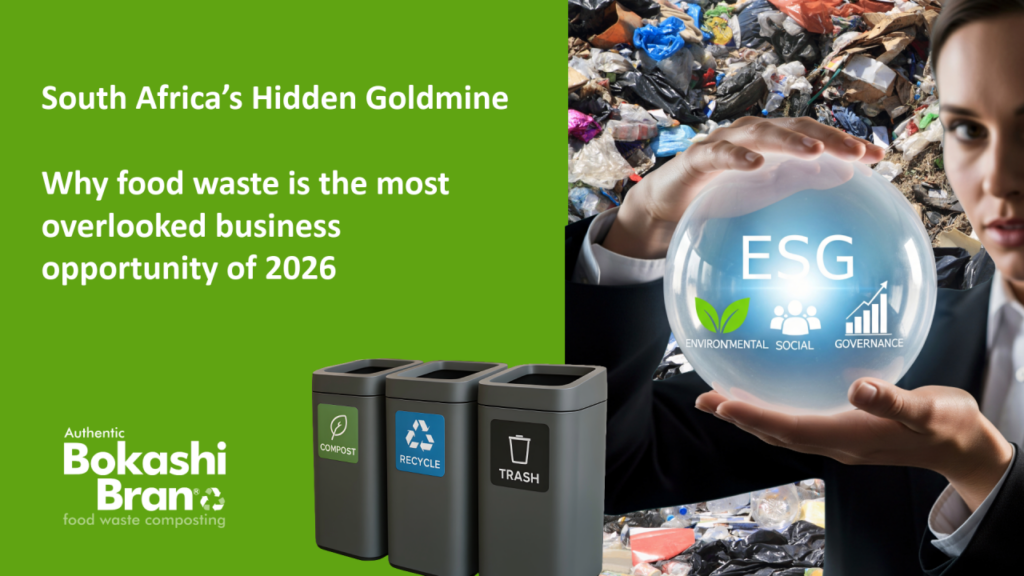
South Africa is discarding over 10 million tonnes of food every year and paying some of the highest landfill costs in Africa. This means that businesses are losing money with every bin that they send to landfill instead of capitalising on it to create a new revenue stream for their company whilst helping the environment at the same time.
Food waste is one of the most expensive waste streams that South African companies produce because of factors such as Environmental compliance pressures, higher disposal fees as landfill airspace shrinks, transport costs and a loss in resources like food, electricity, water and labour[DO1] .
In most big cities, landfill sites are already over capacity with other landfill sites having less than ten years of airspace left with it forcing municipalities to regulate the industry[DO2] heavily by enforcing restrictions on organic waste and implementing higher disposal costs.
For Businesses: Onsite food waste treatment is becoming increasingly popular because of the financial benefits that it provides. Businesses can benefit by up to 40% in waste reduction volumes equating to lower transport fees, savings on eliminating landfill fees, reduced kitchen odours and contamination which all translate into improved ESG reporting as well.
South African soils are dying rapidly and an increase in nutrient-rich soil is essential to establish food security for the future of the country. When food waste is properly treated, it becomes a powerful resource: it builds healthier soil, revitalises land, nourishes community gardens and significantly helps reduce carbon emissions.
In 2026, South African companies will need to adopt these essential ESG changes for three key reasons: Regulation is tightening and compliance needs to be met; sustainability reporting is mandatory and will come with huge fees and penalties if sustainability goals are not met and a wide group of investors and customers are demanding proof of climate action.
Companies that get involved now will strengthen compliance, cut costs, improve their brand image and build long term benefits for their company.
Where do you start?
Measure it: What’s coming out of your kitchen, canteen or office dustbins? How much? How often?
Separate it: Keep your food waste separated from other waste streams
Treat it on-site: Bokashi Bran® composting systems available at: https://bokashibran.co.za/
Track it: integrate your food waste production into a part of your ESG reporting
Complete the cycle: Return the treated waste to soil
Food waste is not a burden, it doesn’t have to be something that wedges a stepping barrier in your business success. It is the easiest and most accessible business opportunity that too many companies are overlooking. In a country facing landfill shortages, rising food prices and climate pressure, food waste is no longer something we can afford to ignore.
It’s time to turn our scraps into strategy.
Give us a call or drop us an email and we will help you understand what the opportunity is for your business!
Call: 082 456 9225
WhatsApp: 082 456 9225
Email: info@bokashibran.co.za