
What Is Bokashi? A Beginner's Guide for South African Homes
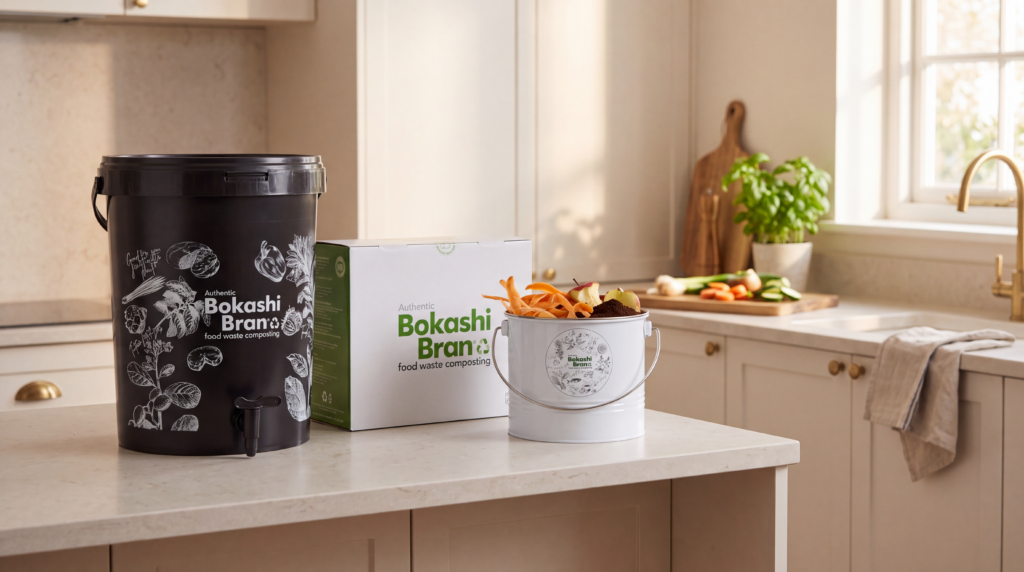
Bokashi is the simplest way to keep all your kitchen scraps, including meat, bones and cooked food, out of the dustbin and turn them into food for your garden. It happens right in your kitchen, in a sealed bucket, with no flies and no rotting smell.
If you’ve ever tried a compost heap and given up, or you live in a flat and assumed composting wasn’t for you, this guide is for you. In about five minutes, you’ll know what bokashi is, how it works, what you need and exactly how to start.
What is bokashi?
Bokashi is a Japanese word that loosely means “fermented organic matter”. Instead of letting food scraps rot, the bokashi method ferments them, a little like pickling.
The magic is in the bran. Bokashi Bran® is bran that has been brewed with beneficial microbes using the original EM® (Effective Microorganisms) technology from EMRO® in Japan. The microbes in our bran are indigenous to South Africa; they are not flown in from Japan. When you sprinkle the bran over your food scraps and seal the bucket, these microbes get to work without air, fermenting the waste instead of letting it decay.
The result is what we call pre-compost: food waste that is fermented and stable, but not yet broken down into soil. Once you bury it or add it to a compost heap, it breaks down quickly into rich, living soil.
Bokashi vs a traditional compost heap
The biggest difference is what you can put in. A traditional compost heap should not take meat, bones, dairy or cooked food, because they rot, smell, generate pathogens and attract rats and flies. Bokashi ferments these safely, so nothing from your kitchen has to go in the bin.
| Bokashi bucket | Traditional compost heap | |
| Meat, bones, dairy, cooked food | Yes | No |
| Where it happens | Sealed bucket in your kitchen | Outdoors in the garden |
| Smell | Mild, sour, pickle-like | Can smell if not managed |
| Flies and rodents | No, the bucket is sealed | Can attract pests |
| Effort | Add scraps and bran, close the lid | Turning, balancing greens and browns |
| Space needed | A spot in the scullery or garage | A corner of the garden |
The two also work well together. Adding bokashi pre-compost to an existing heap gives it a boost of microbes and nutrients. You can read more in Old School Composting vs Bokashi Composting.
What you need to get started
- A counter container with a lid to collect scraps while you cook. The lid keeps flies out.
- A bokashi bucket with an airtight lid, a straining tray and a tap. Our buckets come in 20-litre and 25-litre sizes.
- Bokashi Bran® and a scoop. A household typically uses about 1kg a month.
- Ideally, a second bucket. While one full bucket ferments, you keep filling the other.
Our kits bring all of this together, so you can start the day it arrives.
How to use your bokashi bucket, step by step
- Start with a sprinkle. Put your bucket somewhere handy and out of direct sun. Sprinkle a scoop of bran onto the straining tray.
- Collect scraps as you go. Scrape peels and plate leftovers into your lidded counter container while you cook and eat. This means you open the bucket less often.
- Empty the container into the bucket daily. Don’t leave scraps in the counter container for long, or they will start to rot. Cutting large pieces smaller helps them ferment and saves space.
- Press it down. Use a potato masher to squash out air pockets. Keep each layer to about 7cm thick.
- Add bran. Sprinkle a scoop (about ½ cup, or 100ml) of Bokashi Bran® over each layer so the surface is covered. Add a little extra over meat or bones.
- Seal the lid tightly. Bokashi works without air, so an airtight lid is essential.
- Drain the tea once or twice a week using the tap (more on this below).
- Repeat until full. For a family of four, a bucket usually fills in three to four weeks.
- Let it rest. Once the bucket is full, leave it closed and out of direct sun for two weeks to finish fermenting, and start filling your second bucket.
What can and can’t go in
Almost everything from your kitchen can go in, as long as it’s fresh.
| Yes, add it | Keep it out |
| Fruit and vegetable peels, including citrus | Smelly or already rotten food |
| Cooked food and leftovers | Large amounts of oil |
| Meat, fish and chicken bones | Too much liquid |
| Cheese and dairy | Plastic, tins, glass and foil |
| Eggs and eggshells | |
| Bread, cakes, rice and pasta | |
| Coffee grounds and tea bags | |
| White serviettes and small amounts of paper |
Want a list for the fridge door? Download our printable “What can go in bokashi” guide to teach the whole family.
Bokashi tea: the bonus you get for free
As your scraps ferment, liquid collects under the straining tray. This is bokashi tea, a concentrated organic plant food packed with microbes.
- Drain it once or twice a week using the tap. Give the bucket a gentle shake to check if there’s any. If you leave it too long, it can start to smell.
- Feed your plants. Dilute about a cup of bokashi tea in a 25-litre bucket of water and pour it around the roots. Avoid pouring it straight onto leaves.
- Freshen your drains. Pour it undiluted down the kitchen sink or shower drain to help clear odours.
Don’t worry if there’s little or no tea. The amount depends on how wet your scraps are: tomatoes produce lots of liquid, bread hardly any. For more ideas, see Bokashi Tea for Healthier Drains and “Green” Tea Gardening.
What to do when your bucket is full
After its two-week rest, your pre-compost is ready to go back to the earth. It will still look like food at this stage; that’s normal. It breaks down once it meets the soil.
If you have a garden: dig a trench, empty the bucket in, mix it with some soil and cover it well. Within two to three weeks, most of it will have turned into rich, dark soil full of nutrients and microbes. See 5 Ways to Use Bokashi Bran in Your Garden for more ideas.
If you have a compost heap: bury the pre-compost under garden waste in the heap, and turn the heap once a month.
If you have no space to dig: use a standing compost bin placed on soil, not concrete. Start with a few spades of soil, add the pre-compost, cover it with more soil, leaves or grass clippings, and close the lid. After four to six weeks, most of it will have become concentrated compost you can mix into pots or beds. Our container gardening guide has ideas for small spaces.
Finally, rinse your bucket with water and an eco-friendly detergent, and it’s ready to go again.
Quick troubleshooting
What should it smell like? A healthy bucket smells sour and slightly cidery, a bit like pickles. White fungal growth on top is a good sign.
It smells rancid, or there’s black mould. Something has gone wrong. The usual causes are a lid that isn’t tightly closed, tea left too long without draining, rotten food going in, too little bran, or the bucket standing in the sun. Add two cups of bran and seal it. If it still smells bad, bury the contents in a hole, pour a kettle of boiling water over them, add two more cups of bran and cover with soil.
There are maggots. A fly probably laid eggs on scraps in an open counter container. Add an extra scoop of bran and keep the bucket sealed for four days. Without air, the maggots die and become part of the pre-compost.
My dog ate some bran! No need to worry. Bokashi Bran® is made with a food-grade culture, and its microbes are common in nature and do not cause disease.
Still unsure? Our post What should my food waste look like in my Bokashi bucket? has more detail, and our FAQ page answers the most common questions.
Ready to start?
Every kit has what you need to begin the day it arrives. Choose from our Bachelor, Starter and Super-Charged Starter kits, or treat yourself to the Deluxe range, which pairs a stylish 6-litre Deluxe Counter Caddy (with a charcoal filter lid to trap odours) with either the 25-litre black Obsidian bucket or the 20-litre white Alba bucket.
Already have a bucket? Top up with Bokashi Bran® in our shop.
Bokashi Bran® has been helping South Africans keep food waste out of landfill since 2012, and it’s the only commercially produced bokashi in South Africa with authentic certification from Japan. Questions before you start? Email info@bokashibran.co.za or call 083 790 1043 / 082 456 9225.